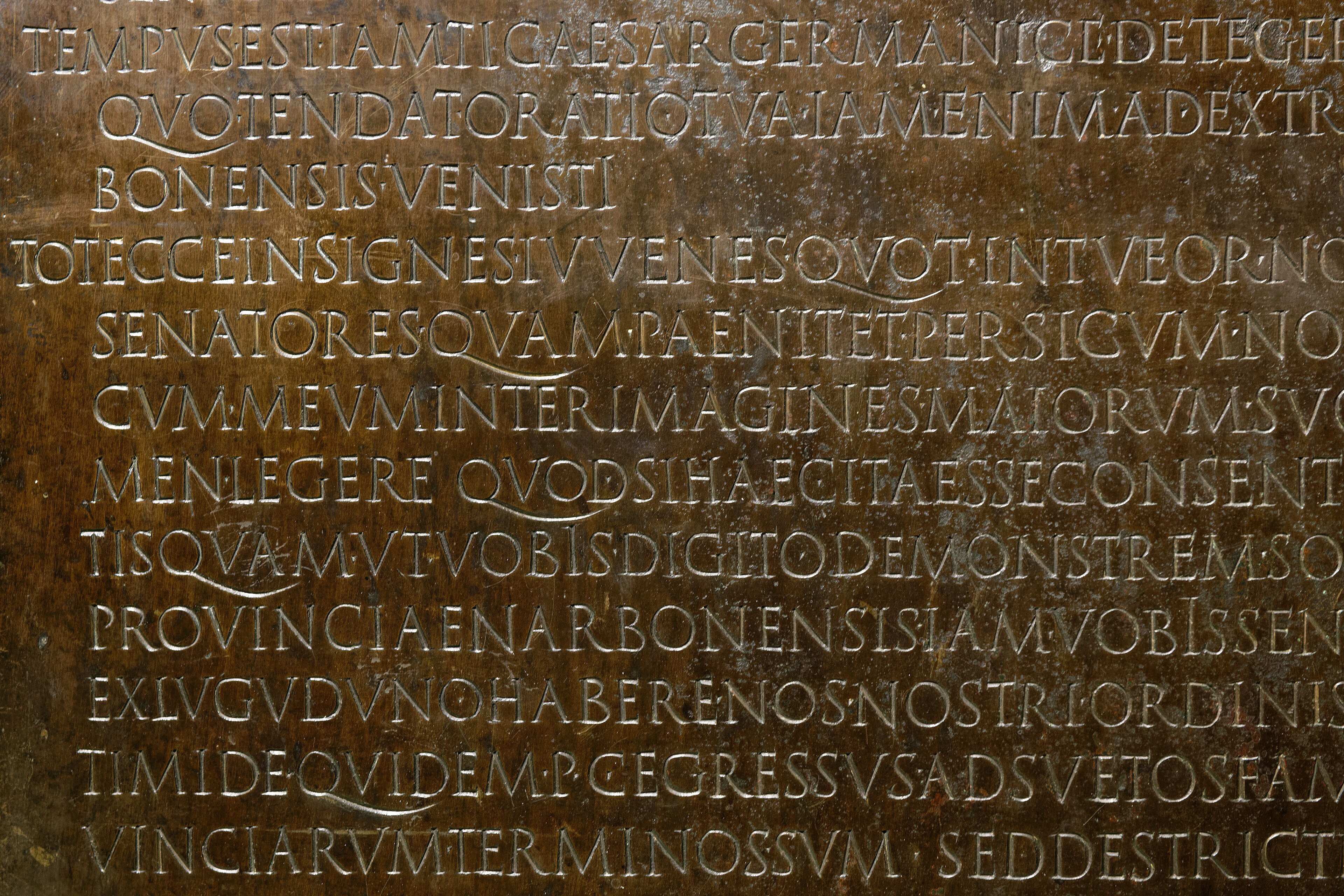
Rome kept its rites long after they stopped meaning what they said. Was Rome a genius in conquest, or a genius in keeping the form of the sacred while everything beneath it changed?
Around 280 BC, Rome was facing a war against Pyrrhus of Epirus, where the Roman state encountered a difficulty of a rather procedural nature… A difficulty where Roman religious law dictated that war be declared by a priest of the fetial college. This priest would be expected to travel to the frontier of the enemy and launch a blood-tipped spear of cornel-wood across the border, where the immediate difficulty here was that Epirus sat several hundred miles away from Rome, along with an entire sea between them… thus preventing the ritual from being performed.
What then, was Rome’s solution to this problem? A simple one, Rome did not abandon the ritual, nor did it admit that declaring war had become impossible. It worked around the problem, something along the lines of using a captured Pyrrhan soldier that may have been coerced into purchasing a small plot of land near to the temple of Bellona in Rome. With that done, this plot of land was now property of the enemy, making this legally enemy territory. As you can imagine where this is going, a column was then raised beside it, and from this column (the columna bellica), the fetial priest launched his blood-tipped spear into this hostile ground, all without ever leaving the city. Here, through some Roman ingenuity as I shall call it, Rome had manufactured a foreign country within its own walls, where the correct procedure could then be observed, they made a problem and then worked around it.

It is rather easy to read this circumvention of their own process as absurd, perhaps even address this cynically. Both viewpoints are not without merit or defence, but for me I think that this is such a good example of what Rome contributed to the history of power in the world we know today, and in their own time. Rome’s distinction in conquering was that each conquest was conducted within rules, belonging to the grammar of the law. This very same grammar proved to endure longer than the empire that generated it.
The Origins
As far as can be told, it’s believed that twelve bronze tablets were set up in the Forum around 450 BC, with the twelve tablets having been extracted from patricians by plebeian pressure. What these plebeians wanted was not a better law, but a more visible law, a law that could be read and memorised, even cited when required, rather than blindly administered by the priestly class, discussed in private. Livy called the tablets the source of all public and private law, where it was only later in Rome’s history that they stopped being quoted. Even as many as six centuries later, the tablets were still being viewed as the source of Roman law, however accurate we deem that to be.
The tablets, written in archaic Latin, a language already becoming obscure at this time in history, carry an interesting prose, with the tablets being constructed as a bare conditional, decreeing:
si quis, “if anyone”
You have to note here, it’s not stating “if a patrician”, or “if a member of this clan” or some elite group. It’s “if anyone”. This is a wide spanning set of rules, aimed at all and governing all. It simplified matters more than you would expect, where provisions are stated more as declaration, iterated one after another with neither subordination nor qualification, just a simple: “If X, then Y”.
This approach to law can be considered a legal immaturity by many, where in modern times you may even see this called a parataxis, in this instance where the law remains close to custom but lacks the sophistication that classical jurists may have brought to the topic.
I can’t argue with that being a fair assessment of the situation, although I do think it misses what the construction of it carries out. Here we’ve got a rule that has been addressed to anyone, it has been published in a place where it’s accessible to all, and the rule itself distances itself from the person applying it. It’s something we can observe throughout Rome’s history that Rome itself would spend roughly the next seven centuries trying to discover how far this would go, with the law’s formula assuming it exists in a world of interchangeable legal persons, almost tempting it to be tested.
Unfortunately for those of us curious, the Gauls’ sacking of Rome in 390 BC led to the destruction of the bronze tablets, where everything we know of them comes from accounts, such as those of Cicero and Aulus Gellius. Sadly, it’s because of this that Rome’s foundational legal text only survives with us through fragments of the time, reported through the arguments or reporting of later people, which takes me to another unfortunate circumstance… How much of what we know, is the truth of what we should know?
The Side-Stepping Law
Pardon the odd way in which I’m addressing this, however the next iteration of Roman law certainly wasn’t something I would call a progression of the bronze tablets, more so a lateral move to perhaps broaden them. For some context, every year there would be an incoming praetor (a praetor being a politician as opposed to a lawyer) and these praetors would publish an edict where they would announce the legal principles that they intended to apply. These would be framed in the first person, where to put it simply, the praetor would say something like…
“I shall grant an action”
~Roman Praetor, probably.
These praetors, politicians if you would, primarily inherited their predecessor’s text and simply made adjustments to older civil law, where that older law was either unjust, or riddled with gaps due to the overly rigid nature of it.

As you may have imagined, over time this caused a second body of law, the ius honorarium, to develop and run alongside the older ius civile, correcting it over time with subtle changes.
Papinian, a man that many consider to have been one of the greatest in this space, formulated a classic approach to these laws, where praetorian law exists to aid (adjuvandi), supplement (supplendi), and correct the civil law for the public benefit (corrigendi). Something you might notice is missing though… there is nothing here about replacing laws, the Roman law here just adapting and building on existing laws, leaving the old structure of the laws standing whilst newer laws were built alongside this.

The nature of how the laws were built helped contribute to why legal fictions can be considered so characteristic of the Roman mind from the time, where if a rule didn’t reach a case, the rules were not changed by the praetor, he just granted an action as if the qualifying facts or statements were true. Think about that creative workaround before, that little patch of enemy soil, by purchase, beside the temple of Bellona, it’s a law that due to rigidity required creative workarounds to achieve the desired solution, where perhaps the law wasn’t even worth its weight in … bronze? Rome just constructed a legal condition where their rigid procedures could work, and perhaps to my admittedly biased modern mind… it almost sounds like these procedures were set up to fail from the beginning.
The emperor, Hadrian, determined that these laws needed consolidating, so he had the jurist, Salvius Iulianus, consolidate the laws into a fixed text, updating the edict into the Edictum Perpetuum. This culminated in change only coming from the emperor, where how complete this change actually was is still a hotly contested topic between historians today, but we can certainly see today how this started a movement away from magistracies into authority residing with a single person.

The (un)Just War
This is where we can come back to the fetial priests, those people launching blood-tipped spears into little presumed-hostile clumps of soil. Rome liked to believe that it had never fought an unjust war, where the fetial college resided as an institutional form for that belief. Prior to any hostilities commencing, the pater patratus (think of them as the chief priest) would head to the frontier and demand restitution. This priest would call out to Jupiter and Janus Quirinus to witness how just Rome’s demands were, where if these demands were not satisfied within thirty-three days, the aforementioned spear was thrown. The practice of demanding restitution was written into doctrine by Cicero, with this being developed by Augustine, who transformed it further into Christian thought, where over time this has just developed further and further, bleeding into modern life after following a long broken road of honouring a ‘just war’, with modern international law adopting a similar principle, not too dissimilar from the first and second iterations of Roman law, being adapted and built upon in parallel.
It’s interesting to think about how this relatively minor, archaic rite would become one of the more consequential things that Rome produced, where even modern scholars are divided on opinions of what it was actually doing, with John Rich and Thomas Wiedemann both arguing that the priests had stopped declaring Rome’s wars long before the great conquests. There are some who believe the fetial priest war declaration was mostly obsolete well before even Rome’s major wars of conquest, where it was said that envoys would carry senatorial instructions in place of the priests, where the college remained primarily for treaties and the surrender of Romans that had broken the treaties. There is a great read on this in the Classical Review, found here: Classical Review.
William Harris has argued that the rite never restrained Roman aggression, where it instead let Rome experience every war it started as a response to an injury, and it has further been suggested that the rituals themselves shaped how the wars began, covered in depth by Mary Beard, John North and Simon Price in Religions of Rome (1998). It’s said that the rituals were more involved in the timing of the wars, the procedure, and the shared need of a just case (iusta causa), without constraint on whether or not the war would ever begin.
I suppose this is why I’ve titled this what I have, the grammar of the empire. Grammar isn’t saying what to say, it’s more that grammar is structuring the sentence, it’s telling you what the sentence will consist of in a more prescriptive manner. This legal-religious machination of Rome’s wasn’t stopping any wars; it was more that it determined the form which a war had to take on in order for it to be considered a Roman war. Many years after these laws were written, in 32 BC, to avoid calling it a civil war, Octavian used this ritual, in the grammatical sense, to declare war on Cleopatra, adhering to this traditional rite… Changing the civil war against Mark Antony into an ordained Roman war against a foreign entity. An interesting way to engage in war, using rigid stipulations to justify your desire to do so.
Was it just for war?
With so much so far being said about how Rome’s grammar influenced wars, it’s easy to ignore that the set of rules expanded to other areas, where Rome even had parts about citizenship included within this. It’s worth knowing here that to be Roman was a legal status, it was not an ethnic status, where the category of what being Roman meant could grow as did the definition. What it meant to be Roman could grow under pressure from varying factions, where usually this pressure could turn violent to make amendments to the definition, with certain allies of Rome even fighting in wars to receive the status. There also existed other methods of becoming Roman, whether this was through military service or individual grants depended on your situation, but this could benefit either individuals or entire communities. It’s even acceptable to say that by the third century, as Myles Lavan has estimated, no more than a third of the free population of the provinces held Roman status, where this grammatical definition of what it meant to be Roman was perhaps being stretched to the limit of what the definition could bestow upon people.
The increase of Roman citizens continued, eventually leading to the Roman emperor of the time, Emperor Caracalla, extending citizenship in 212 AD to almost every free inhabitant of the empire. The Constitutio Antoniniana remains today as a damaged Greek papyrus from Egypt, where it granted all free people throughout the Roman world, with the exception of the dediticii (a class of free provincials), Roman citizenship. The Roman historian, Cassius Dio, was rather critical of this, stating that he believed the real reason this was done was due to inheritance tax, which may have had some truth in there, but who is to say after all these years, all I can say for certain here is that the framework was expanded once again.

To think, millions of people just instantly became Roman citizens around the world, people that spoke no Latin, nor ever would. Perhaps not a far-out concept considering the bilingual nature of the empire, with the Latin speaking army, Senate, and the legal system, with philosophy, medicine, commerce, and the majority of the eastern cities containing the wealth and main populace speaking Greek. Quintilian advised that a boy should start with Greek, since he would pick up Latin anyway. Which looks like a war that Rome didn’t win in this instance, despite setting the requirements for it, the war on language, although could it be considered a war when the two lived side-by-side together? Or is this just a trait of the empire as a whole, with further language propagating due to the expansion of Roman citizenship.
Our Inheritance
Cassius Dio may have said that the Roman citizenship expansion was one for purposes of taxing inheritance, but we ourselves have inherited something from the empire and the adherence to what I have called the grammar of the empire. We operate within this grammar, where we still possess the assumption that power becomes legitimate when it is exercised properly, that we determine a difference between the horrors of war by deciding if they were simply a war, or a declared war, where we view acquisition with a narrative of lawful and unlawful acquisition, and we elect rulers to rule, measured by their ability to rule, and their will to rule. Our laws today operate in a similar manner, where in the Western world in particular, our opinion of what is decent in a public life is viewed through the lens of just and unjust, where in the same sense, it has become the most durable alibi for our way of living… just perhaps not in modern times buying a plot of land and declaring war from this.
I’ll end it on this, but is it possible that Rome wasn’t a genius in conquest, but more a genius in understanding how to keep the form of the sacred present, where despite an ever-shifting substance of power, the rites remained to deliver the conquest the rulers were vying for?
Further reading
- M. H. Crawford, editor, Roman Statutes. Institute of Classical Studies, 1996.The standard edition of what survives of the Twelve Tables.
- Barry Nicholas, An Introduction to Roman Law. Clarendon Press, 1962.The clearest short account of how Roman law actually worked.
- Clifford Ando, Law, Language, and Empire in the Roman Tradition. University of Pennsylvania Press, 2011.Legal fictions, and how Roman law stretched to cover an empire.
- J. W. Rich, Declaring War in the Roman Republic in the Period of Transmarine Expansion. Latomus, 1976.The case that the fetial rite had faded before Rome’s great wars.
- Mary Beard, John North and Simon Price, Religions of Rome. Cambridge University Press, 1998.Where the fetials and the rest of Roman state religion are set in context.
- A. N. Sherwin-White, The Roman Citizenship. Clarendon Press, second edition 1973.How being Roman became a legal status that could be granted.
In the Archives
This essay draws on the Ancient Rome archive, where the same ground is worked through in eight themes.
Image: The Claudian Tablet, bronze, 48 CE, with Claudius’s speech to the Senate on admitting men from Gaul. Lugdunum Museum, Lyon. Photograph by Marie-Lan Nguyen, public domain, via Wikimedia Commons.


