Flood stories turn up everywhere from Babylon to China. Are they all remembering the same great flood, or is each one telling us what its own people thought water was?
See every object in The Flood, in Objects, a visual essay.
Once upon a time, the gods destroyed humanity because it was simply too loud… if you were to believe the oldest fully preserved version of the story, at least! That is the premise of Atrahasis, it’s an Old Babylonian poem where the human population was growing… Right up until its rigmu, the noise of the population, disturbed the god Enlil too much, basically stopped him sleeping. Enlil attempted a plague, which the humans survived, he tried drought and famine, which humanity likely stumbled their way through too. Then the third attempt of his was a flood, a colossal flood, where even his colleague Enki had to subvert the plan with a technicality. Enki was sworn to not warn any human being, which he cleverly works around, as we’re familiar with from other tales of gods, by speaking to a wall. The wall of Atrahasis’ reed hut. Which allows the man behind the wall to draw his own conclusions from this.
Once the water of the flood recedes, the gods realise a problem though. This flood… the flood to wipe everyone out? That’s great and all, but who is left to feed them? When Atrahasis then finally makes his sacrifice, they descend upon it, almost like flies. The new order established afterwards then is not one of moral covenant, no, it becomes a set of population controls; death, miscarriage, classes of women that will not bear children, all brought about to reduce the risk of that pesky noise problem recurring once more.
I thought I’d start here, whilst also being aware that in the world at present there have been some horrible floods whilst I was typing and researching this post, which got me thinking about many things. One being the general idea carried by the Western world of the “flood myth” let’s say, a flood sent to remove wickedness, judgement, somewhere there’s a righteous man here, maybe a rainbow even. This time around though, in the Old Babylonian myth, it isn’t anything inherently cruel being done, it’s just humanity being too loud that calls for a flood to remove the overcrowding-fuelled insomnia, leading to a divine family planning policy, not too sure I’ve seen much about that in any recent laws… However, jokes aside, I liked the idea of starting with a flood of this proportion where the outcome was fundamental to how the human population continued.
The Broken Argument
Whilst I was researching floods, I have to say it was pretty crazy how many flood stories appear all over the world. It’s as if floods, throughout our time on this Earth, have stood to represent that we must remember something. The message from the flood stories implies that we as people need to remember some enormous inundation, which was witnessed only by scattered survivors, where these ancestors of ours each preserved a different version of it.
It’s interesting though, for me as a natural sceptic with many things, something seemed off to me. The flood stories don’t appear to lead back to any single flood, with material evidence around the world hinting at this. There appears to be a lack of general consensus around the world about this flood, where I’d have expected at least some general agreement, with perhaps some cultural embellishments here or there. There isn’t though, there doesn’t appear to be one agreed upon consensus of these floods, making it hard to believe that any particular flood caused the origin of these stories, perhaps something fuelled by a deeper and more innate fear of the water.
The stories themselves reverse what I’d normally expect to build cohesion, the stories provide us the opportunity to demonstrate that the stories of the flood are related, but in doing so we’re demonstrating relation through text rather than through shared collective memory. Which means if we lose the ability to draw any connection, or even correlation, between the stories, the stories ultimately turn out to not be the same thing after all, kind of weakening the thought that the floods must have an origin.
The Transmission Reality
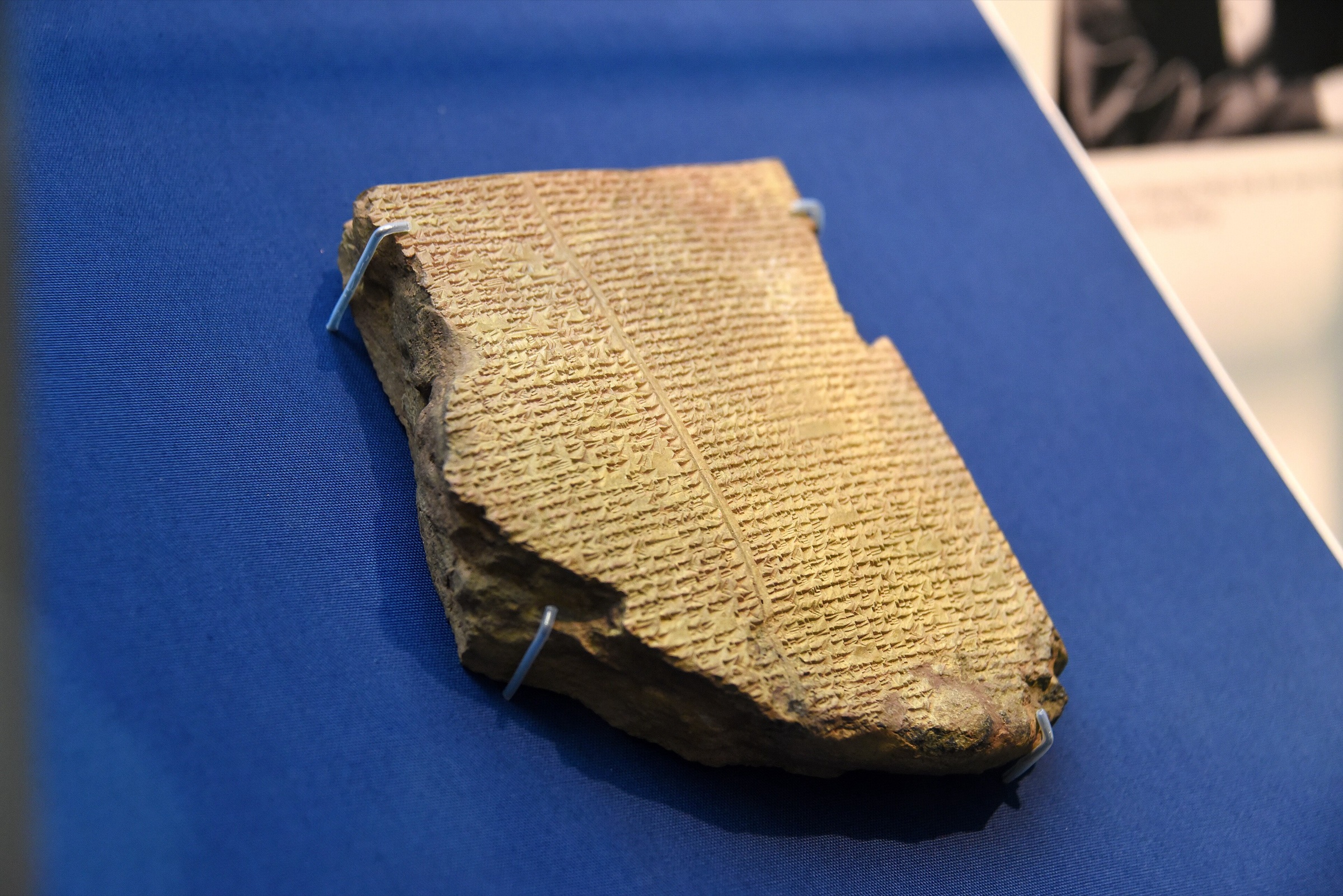
Surely then, given I decided it was worth writing about, something must be real, right? Well, sort of, and it starts with the Sumerian composition, sometimes referred to as the Eridu Genesis. In this, there was a pious king by the name of Ziusudra, who received a warning from Enki. The king then survives in a great boat and in turn is granted eternal life in Dilmun. I wonder how many of us read that and saw the great boat and wanted to give it a name? Well… the consistency continues further, with the Sumerian King List using this same event, the flood sweeps over, kingship comes down from the heavens. Then, we have Atrahasis with the noise complaint and reed wall, Tablet XI of the standard Epic of Gilgamesh where the survivor is renamed Utnapishtim … Telling us the story of a hero looking for immortality. Then, we have Genesis 6-9.
Without me directly pointing it out, most of us would already have realised the similarities of the biblical account, how they are not just simple thematic similarities, but rather specific matters with structural cohesion throughout each story. We have the divine decision to destroy humanity for one reason or other, a single favoured man, then there comes a boat (usually with stated dimensions and sealed with pitch), then there are animals taken aboard said boat. As you read more, you find the boat becomes grounded on a mountain, birds are released to find dry land, there is a sacrifice when disembarking the boat, and then a divine response to it all. Typing this out, I basically was recounting almost every story I came across whilst reading, and to be honest with you, I was most familiar with the Bible entry, not for any religious reasons, but growing up in Britain in the 90s this was just a common thing to hear about in school songs and teachings. It’s hard to consider all of this a shared memory of folk around the world, it comes across more as text being copied and adapted throughout the eras, where we have to appreciate how it would have been rewritten throughout time to account for changes to language and the lesson being given here.
We have the work of George Smith to thank for a great deal of our knowledge on these stories, where in 1872, he was working on some tablets from Nineveh in the British Museum. It was here that he recognised the flood narrative on Gilgamesh XI, where he then announced it to an … “open minded” … Victorian public, a public that reacted more or less as you would expect. Since these times, a man called Irving Finkel has published an Old Babylonian tablet, where the ark was described as a round coracle … A vessel which, when I searched the word coracle, left me curious how the stories of all the animals entering came to be.

Credit to: Osama Shukir Muhammed Amin, CC BY-SA 4.0 https://creativecommons.org/licenses/by-sa/4.0, via Wikimedia Commons
A Different Argument… Within the Same Story
Along the way with this, multiple times I almost missed something rather crucial to the entire conversation, something I’m prone to when I’m running parallel stories and narratives together. It’s that Genesis takes the Mesopotamian narrative and builds on top of it. Yes, the cause of the flood changes from noisy neighbours to a more morally corrupt causation, and the divine actor is changed from a quarrelsome assembly outmanoeuvring one another to a single God with ultimate decision-making responsibilities. And yes, the resolution does change completely, we’re not reading about demographic controls to keep our noisy neighbours down, we’re reading about a covenant and a promise to never bring forth such a flood again.
That being said though, the elements from the plot remain, the meaning has changed slightly but overall remains the same if we boil it down to the core of things. This is a great example of where literary dependence can sit outside of serious dispute for the narratives given, where if this is the result of a narrative transforming over the eras, then when we are certain of transmission, we must appreciate the similarities and understand why they may exist. The similarities may simply exist due to building on an existing framework, or they may exist as a story progressing through time.
A Flood Not Designed To Punish
It’s this developing on previous narratives that ended up in me reading about a flood myth in China. The Chinese version of the flood myth fails to match almost every point that makes it even a flood myth to begin with, starting with how in Chinese tradition, the flood itself is not an event as much as it is a condition. A condition where a chronic state of watery disorder existed in the time of the sage-kings Yao and Shun, where waters overflowing their channels and inundating the land drove people to the high ground. In this story, there exists no ark, there is no chosen survivor and no divine punishment. Simply because there is no offence to invoke this, the water is just a result of what the world does when it is not being governed, although I appreciate we could consider the lack of governance an offence in and of itself.
The response to this flood? Engineering. We read about how an individual named Gun steals from the high god a self-renewing soil called xirang, which is then used to build dams and dykes. Unfortunately for Gun, blocking the water ends in failure, where he is then executed for the theft, thankfully we’re not being flooded further here for offences, or we’d have even more problems than we started with. Following Gun is his son, Yu. Yu takes over and rather than stealing from a god and building a dam, he dredges. He follows the nature of the water and cuts channels through the mountains. He opens passages where the flood can drain out to the sea, taking thirteen years altogether. During this time, Yu passes his own front door three times without going in, and something cool of note here during my reading was that this tale is apparently extremely familiar to Chinese schoolchildren, I’d love to hear more about this! Back to the story though, and eventually, when the waters do withdraw, Yu divides the drained land into the Nine Provinces. He surveys the soils, and fixes the tribute based on these provinces.
Which to me is the really fun part and feels like the point of the story. Yu defeating the flood is the creation of ordered political geography, it’s an origin story rather than a punishment story. The man that controls the water and divides the land thereby earns his right to rule, rather than being sent down from the heavens to protect. I’ve read a bit around this, where Mark Edward Lewis views Yu’s channelling of water as the primary metaphor for Chinese governance: where the ruler orders society similarly to how Yu ordered the rivers. By diversion, draining, and working with nature rather than against it. Gun’s dam and Yu’s channel, despite operating in opposition to each other, have lasted as a story, and have given us the method of working with nature. Then when we compare this with Noah and his ark, the two stories share only one similarity in reality, it’s the large quantity of water. One story is about sin and mercy, on being a better person, where the other served as a manual for statecraft.

Credit to: User:Vmenkov, CC BY-SA 3.0 https://creativecommons.org/licenses/by-sa/3.0, via Wikimedia Commons
More of The Same… Or Not
Another version of the myth is more minor than the grander ones we’ve seen so far, and that’s the Greek flood. Zeus destroys the Bronze race; Deucalion, forewarned by Prometheus, survives with his wife Pyrrha stowed away within a chest (not an ark this time), which runs aground on Parnassos. To add a little bit of variety on other versions though, this time an oracle tells them to throw the bones of their great mother behind them. This cryptic clue to what’s required ends up being settled when Deucalion and Pyrrha decide this means stones and the earth, where the stones being thrown grow to become people. That’s right, the present human race we know … Literally descended from the rocks of a stony country with a difficult history. There you have it though, the Greeks’ origin story rooted in their landscape. You’ve probably realised here that this doesn’t seem a common story though, where even within the traditional narration provided by Homer and Hesiod … it’s very scarcely mentioned, but at least we know of a great flood from this era too.
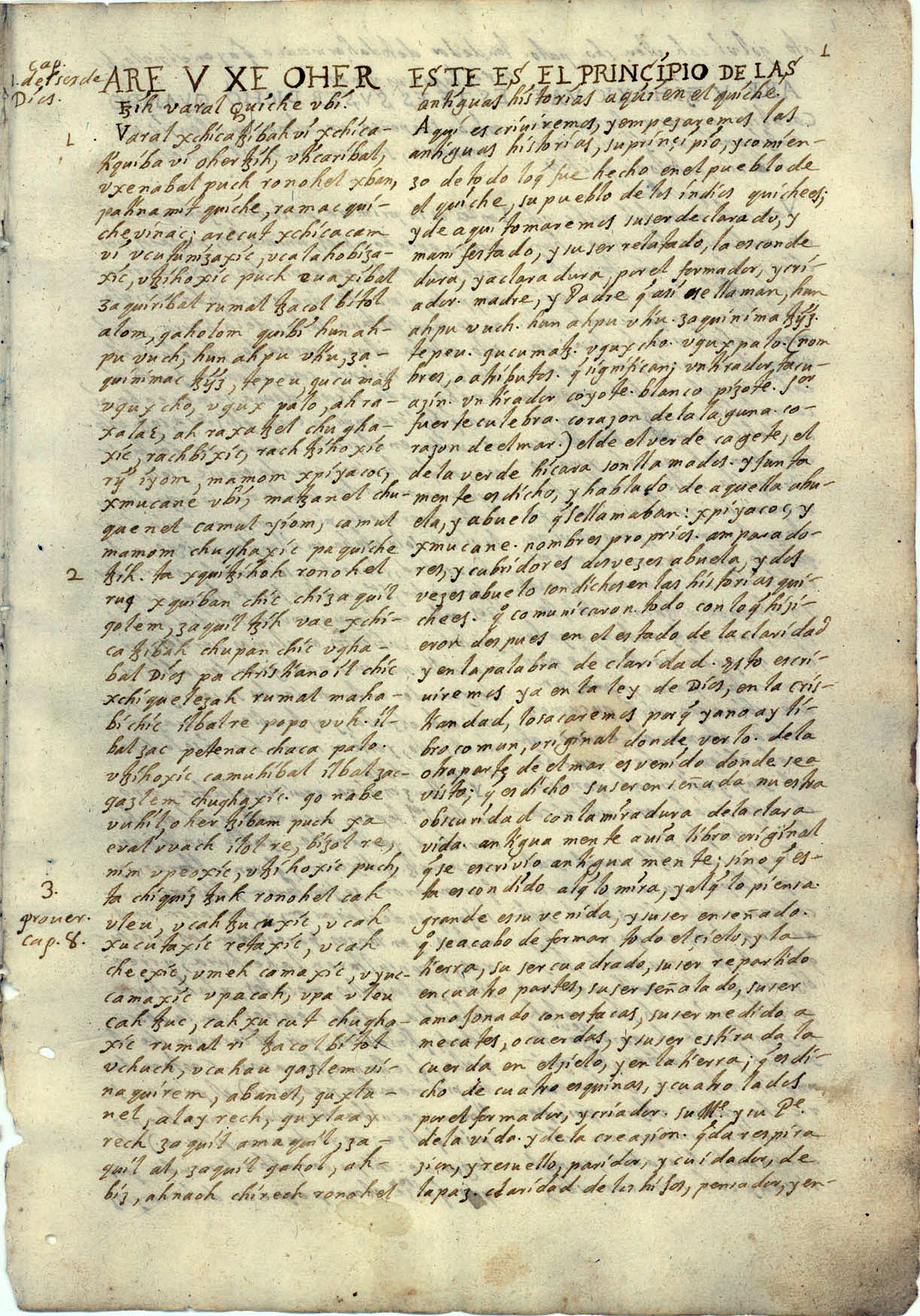
Moving to another area of the world for their stories of a flood, there is the Maya flood. This isn’t even a singular flood. In the Popol Vuh, the gods were making people from mud. These people were dissolving, so they made them out of wood instead. These wooden people multiplied but lacked hearts, minds, or even a memory of their makers. This lack of memory was problematic, as it meant they didn’t honour the gods, so… The gods send a flood. That’s where some of the more obscure reading I’ve done comes out though, because I couldn’t find a parallel in any Near Eastern material for what happens next, the wooden people’s grinding stones and cooking pots rise up with near-sentience and beat the wooden people as revenge for years of mistreatment. The survivors of this tool-laden beatdown became monkeys, a Maya explanation for monkeys looking like us. The Maya used this to show the present world as neither the first nor the last, and to make a theological point about reciprocity and memory. If we forget who our maker is, we get removed, with the flood being one of the methods of removal… Pots and pans perhaps being the next.
Both of these stories root their flood in the punishment side of things, despite being less catastrophic than some of the other floods we’ve looked at, it’s clear the flood remained in these narratives to serve a purpose. It is there yet again to remind those encountering this story to respect and be righteous, where despite the transmission of the story throughout time and geographical locations, core narrative elements remain.
The Informed Differences
When we line each of these stories up by function rather than the cataclysmic weather conditions, the category of “flood myth” is washed away itself. We’ve got the divine irritation of a god, we have the moral judgement and following covenant, we have a permanent hydrological problem solved by man, an origin story from a rocky peninsula, and one where the cycle of worlds is brought about from the crime of forgetting.
If we were to think logically about this fear of water, or about where the thoughts of floods being caused by an unprecedented global deluge come from… It becomes rather simple to think about it. We need water, all throughout history we can find human societies that cluster around water, build our cities around that same water, and even fight over water sources. This water is our life, we need it to survive, and sometimes those waters can flood, just like a river flooding. Coasts creep in further, and as a settled population, you need something to pass down to those after you about that time the flooding river destroyed your entire settlement. It’s a natural fear of a power we can’t control, of a power we need to survive.
From there, it’s up to each society to make something of the story, and I believe it’s largely dependent on the actual relationship that society has with water. Mesopotamia was situated between two rivers that flood unpredictably and destructively, where these people produced gods who flood the world on a whim. There’s China where their central hydrological fact is the Yellow River, a river requiring continuous large-scale management of the waters, where a myth was produced around a flood in which the hero is an engineer that conquers the water and is mandated to govern as a reward. We don’t have all the answers for the story of the floods, or how they’ve spread throughout time, there are still arguments in existence, for example in China, over whether the Yu tradition preserves a memory of real actual waterworks or a Yellow River Catastrophe. That’s still a conversation happening though, and maybe we’ll find even more as life goes on, maybe we’ll one day tell a story of a flood ourselves.
The Origins of the Origin Story
Before I end this, I want to go back to something I said earlier. It’s about why we even have this question today. The comparative study of flood-based myths wasn’t a single inquiry into the folklore of this world. It came about in 1872 within that British Museum reading room. It ended up in the middle of a Victorian argument about whether the Bible was uniquely revealed. It was a scandal, and it wasn’t a scandal about floods, it was about whether the Bible had sources that weren’t discussed, and the resulting controversy that came about because of this.
Interesting isn’t it, how we’ve inherited a question that was designed to test one book against another. Then from there, we’ve gone into a global geological argument and discussion. The stories we’re familiar with likely were never telling us about the same water, the same flood. The stories were telling us what their tellers thought water was: it was a god’s bad temper, it was a governable resource, it was the foundation of the world, or it was the cleansing power bringing on the next cycle to those that failed to pay attention.
Further reading
- W. G. Lambert and A. R. Millard, Atra-hasis: The Babylonian Story of the Flood. Oxford, 1969.The standard edition of the Old Babylonian poem, noise complaint and reed wall included.
- Andrew George, The Epic of Gilgamesh. Penguin, 1999.Tablet XI and Utnapishtim, in the translation most people now read.
- Irving Finkel, The Ark Before Noah. Hodder and Stoughton, 2014.The round coracle tablet, and how the story travelled towards Genesis.
- David Damrosch, The Buried Book. Henry Holt, 2007.George Smith, the Nineveh tablets and the Victorian uproar of 1872.
- Mark Edward Lewis, The Flood Myths of Early China. SUNY Press, 2006.Gun, Yu and the idea that controlling water is how political order begins.
- Dennis Tedlock, translator, Popol Vuh. Simon and Schuster, revised edition 1996.The mud people, the wooden people, and the revolt of the pots and grinding stones.
- Alan Dundes, editor, The Flood Myth. University of California Press, 1988.The comparative argument about flood stories, collected in one volume.
In the Archives
This essay draws on the Mesopotamia, Han China and Ancient Greece archives. They share the same eight themes, which is what lets a single question be followed between them.
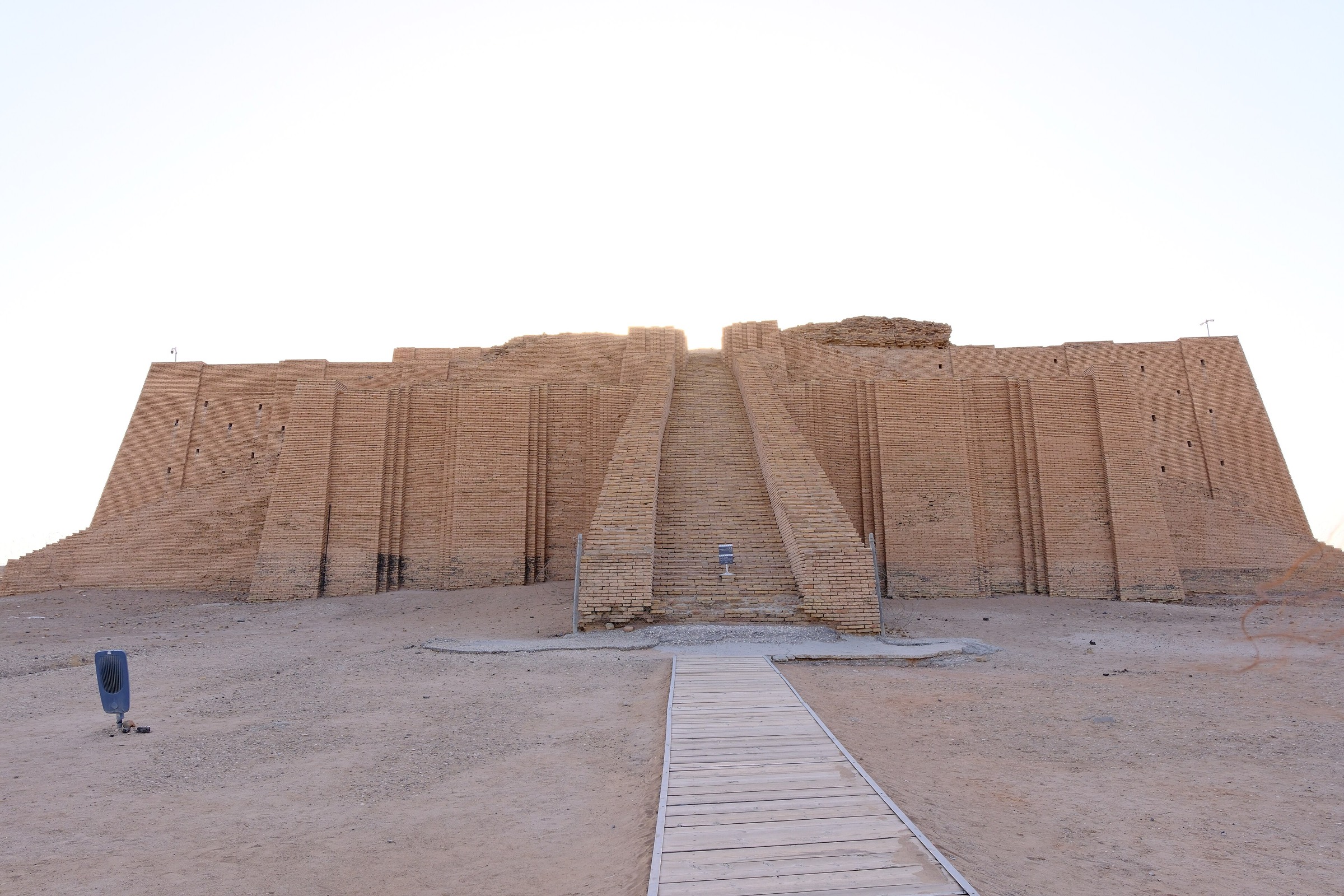
Image: The Ziggurat of Ur, Nasiriyah, Iraq. Photograph by Alli Khalil, CC BY-SA 4.0, via Wikimedia Commons.


